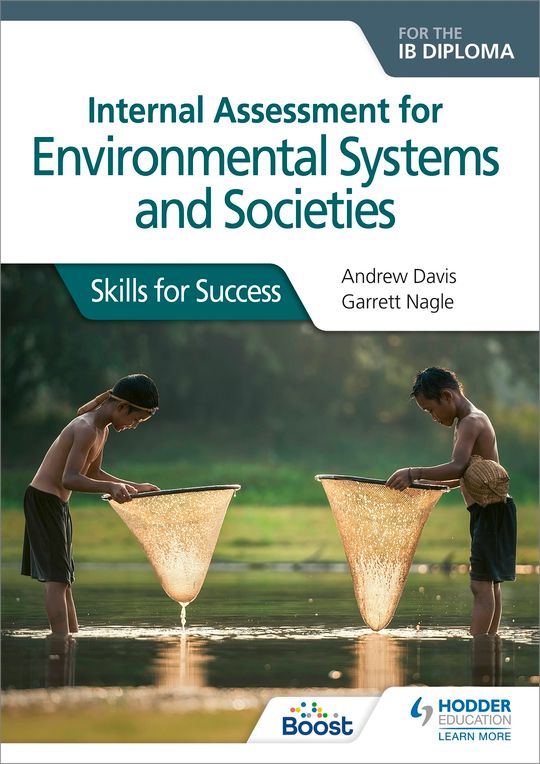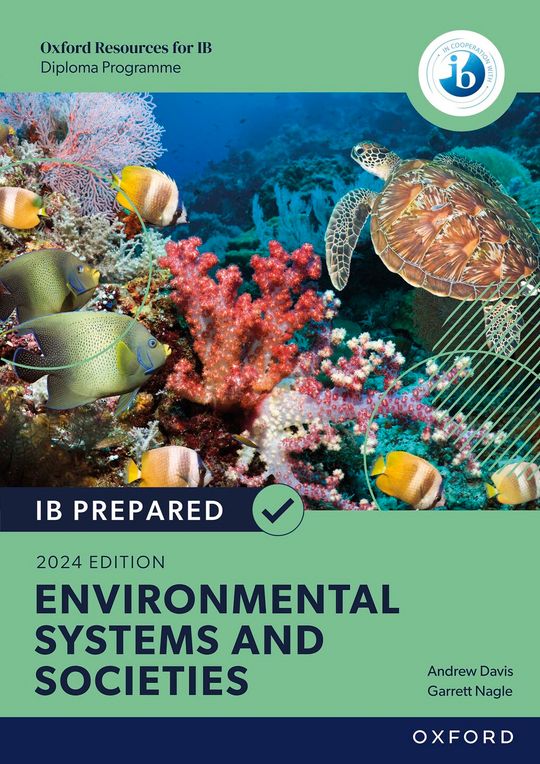
Oxford Resources for IB Diploma Programme: IB Prepared Environmental Systems and Societies 2024 Edition (Digital Book)
US$ 44.99
The publisher has enabled DRM protection, which means that you need to use the BookFusion iOS, Android or Web app to read this eBook. This eBook cannot be used outside of the BookFusion platform.
Description
Contents
Reviews
Language
English
ISBN
9781382076593
Cover Page
Title page
Copyright page
Contents
Introduction
How to use this book
IB principles
Paper 1
Paper 2
Get to know your exams
Environmental systems and societies SL and HL: grade descriptors
Assessment objectives and command terms for ESS
Assessment objectives (AO)
Command terms for objective 1
Command terms for objective 2
Command terms for objectives 3 and 4
How to approach the exams
Revision techniques
During the exam
Key features of the book
Topic 1 Foundation
1.1 Perspectives
1.1.1–1.1.5 Perspectives and values
Values surveys
1.1.6–1.1.8 Worldviews and environmental value systems
Worldviews
Environmental value system (EVS)
The spectrum of EVSs
Decision-making and contrasting EVSs
Intrinsic values of the biosphere
1.1.9 Perspectives change over time
1.1.10 Development of the environmental movement
1.2 Systems
1.2.1–1.2.5 The systems approach
Systems diagrams
Open and closed systems
1.2.6 The Gaia hypothesis
1.2.7 Systems can be applied at a range of scales
1.2.8–1.2.11 Feedback loops
Equilibrium
Negative and positive feedback
Daisyworld model
1.2.12 Tipping points
1.2.13–1.2.14 Models
1.2.15 Emergent properties
1.2.16–1.2.18 The resilience of systems
1.3 Sustainability
1.3.1–1.3.5 Sustainability and its environmental, social, and economic pillars
1.3.6–1.3.8 Sustainable development
Common indicators of economic development
1.3.9–1.3.11 Environmental justice
1.3.12 Sustainability indicators
1.3.13–1.3.14 Ecological footprints
1.3.15 Biocapacity
1.3.16 Citizen science
1.3.17–1.3.21 Sustainability frameworks and models
The circular economy
Text alternatives to non-text content
Text alternative to Figure 6
Text alternative to Figure 7
Text alternative to Figure 9
Text alternative to Figure 10
Text alternative to Figure 11
Text alternative to Figure 12
Text alternative to Figure 14
Text alternative to Figure 2
Text alternative to Figure 17
Text alternative to Figure 18
Text alternative to Figure 19
Text alternative to Figure 20
Text alternative to Figure 21
HL lenses
HL.a Environmental law
Higher Level: HL.a.1–HL.a.4 Environmental law
Environmental Impact Assessments
Higher Level: HL.a.5 Environmental constitutionalism
Australia: State primacy with federal oversight
India: Centralized development of environmental law
Higher Level: HL.a.6 Environmental laws at local, national, or international levels
Higher Level: HL.a.7 Transboundary issues
Higher Level: HL.a.8–HL.a.9 International agreements and protocols
The Kyoto Protocol, Paris Agreement, and Montreal Protocol
Institutions and organizations
Higher Level: HL.a.10 International courts and tribunals
Higher Level: HL.a.11 Granting legal personhood to natural entities
Higher Level: HL.a.12 The role of legal and economic strategies in sustainable management
Higher Level: HL.b Environmental economics
HL.b.1 – HL.b.2 Environmental economics
HL.b.3–HL.b.4 Market failure
HL.b.5 Greenwashing
HL.b.6 The tragedy of the commons
HL.b.7–HL.b.8 Environmental accounting
Use and non-use values
HL.b.9–HL.b.10 Ecological economics
HL.b.11–HL.b.13 Economic growth
HL.b.14 Eco-economic decoupling
HL.b.15–HL.b.16 Degrowth, zero growth, or slow growth
HL.b.17 Circular economy and doughnut economics models
Higher Level: HL.c Environmental ethics
HL.c.1–HL.c.2 Environmental ethics
HL.c.3 Ethical frameworks
HL.c.4– HL.c.6 Instrumental and intrinsic value
HL.c.7 Moral standing
HL.c.8–HL.c.11 Three major approaches of traditional ethics
HL.c.12 The appeal to nature fallacy
HL.c.13 Common goals of environmental and social justice movements
Text alternatives to non-text content
Text alternative to Figure 6
Topic 2 Ecology
2.1 Individuals, populations, communities, and ecosystems
2.1.1 The biosphere
2.1.2–2.1.4 Species and the classification of organisms
Identifying species
2.1.5–2.1.7 Factors that determine the distribution of a population
Populations
Abiotic factors
Biotic factors
2.1.8 Niche
2.1.9 Population interactions
2.1.10–2.1.14 Carrying capacity
Density-dependent factors
Population growth
Human carrying capacity
2.1.15–2.1.17 Sampling techniques
Quadrats
The Lincoln index
Limitations of the Lincoln index
2.1.18–2.1.19 Community and habitat
2.1.20–2.1.23 Ecosystems
Keystone species
2.1.24–2.1.25 Changes to biosphere integrity have passed a critical threshold
Higher Level: 2.1.26–2.1.27 Using classification to illustrate evolutionary relationships
Higher Level: 2.1.28 The fundamental and realized niche
Higher Level: 2.1.29 The life cycle of species
Higher Level: 2.1.30 Understanding the extent of human impacts on species
2.2 Energy and biomass in ecosystems
2.2.1–2.2.2 Energy and matter in ecosystems
The first law of thermodynamics
Energy transformations in ecosystems
Creating systems diagrams
2.2.3–2.2.5 Photosynthesis in autotrophs
The role of producers
2.2.6–2.2.8 Cellular respiration
The second law of thermodynamics
2.2.9 Consumers
2.2.10–2.2.12 Food chains
2.2.13 Gross productivity and net productivity
2.2.14 The number of trophic levels in ecosystems is limited
2.2.15 Food webs
2.2.16 Measuring biomass in ecosystems
2.2.17 Ecological pyramids
Pyramid of numbers
Pyramid of biomass
Pyramid of energy
2.2.18–2.2.19 Pollutants cause changes to ecosystems
2.2.20 Human activities impact energy and matter in ecosystems
Urbanization
Deforestation
Agriculture
Fossil fuels
2.2.21 Autotrophs and heterotrophs
Higher Level: 2.2.22 Photoautotrophs and chemoautotrophs
Higher Level: 2.2.23–2.2.25 Primary productivity and secondary productivity
Primary productivity
Secondary productivity
Estimating primary productivity
Estimating secondary productivity
Higher Level: 2.2.26–2.2.27 Sustainable yields
Maximum sustainable yields
Sustainable yields are higher for lower trophic levels
Higher Level: 2.2.28–2.2.29 Ecological efficiency and the second law of thermodynamics
Entropy
2.3 Biogeochemical cycles
2.3.1–2.3.3 Biogeochemical cycles
2.3.4–2.3.11 The carbon cycle
Organic and inorganic stores
Flows in the carbon cycle
Carbon sequestration
Agricultural systems
Carbon dioxide in oceans
Alleviating the effects of human activities on the carbon cycle
Higher Level: 2.3.12–2.3.16 The carbon cycle (HL)
Limestone
Fossilization
Methane
Higher Level: 2.3.17–2.3.25 The nitrogen cycle
Organic and inorganic stores in the nitrogen cycle
The role of bacteria in the nitrogen cycle
Flows in the nitrogen cycle
Human activities change the nitrogen cycle
The Haber process
The planetary boundary for the nitrogen cycle has been crossed
2.4 Climate and biomes
2.4.1 Climate
2.4.2–2.4.4 Biomes
Creating climate graphs
2.4.5 The tricellular model
2.4.6 The oceans distribute heat
2.4.7 Global warming leads to shifts in biomes
Higher Level: 2.4.8 Patterns of climate
Higher Level: 2.4.9 The effect of secondary influences and human interventions on biomes
Higher Level: 2.4.10–2.4.11 The El Niño Southern Oscillation (ENSO) cycle
Higher Level: 2.4.12–2.4.13 Tropical cyclones
2.5 Zonation, succession, and change in ecosystems
2.5.1 Zonation
2.5.2 Transects
Measuring change along an environmental gradient
2.5.3–2.5.7 Succession
Higher Level: 2.5.8 Tolerating disturbances and maintaining equilibrium in ecosystems
Higher Level: 2.5.9 Factors that affect the type of community in a succession
Higher Level: 2.5.10 Changes in community productivity
Higher Level: 2.5.11 Reproductive strategies
Higher Level: 2.5.12 Challenges to the concept of climax community
Higher Level: 2.5.13 Plagioclimax
Text alternatives to non-text content
Text alternative to Figure 1
Text alternative to Figure 11
Text alternative to Figure 13
Text alternative to Figure 15
Text alternative to Figure 18
Text alternative to Figure 23
Text alternative to Figure 24
Text alternative to Figure 25
Text alternative to Figure 28
Text alternative to Figure 30
Text alternative to Figure 31
Text alternative to Figure 32
Text alternative to Figure 33
Text alternative to Figure 34
Text alternative to Figure 35
Text alternative to Figure 36
Text alternative to Figure 37
Text alternative to Figure 38
Text alternative to Figure 39
Topic 3 Biodiversity and conservation
3.1 Biodiversity and evolution
3.1.1–3.1.2 Components of biodiversity
3.1.3–3.1.6 Biodiversity arises from evolutionary processes
Evolution by natural selection
Speciation
3.1.7–3.1.8 Species diversity is a product of richness and evenness
3.1.9 Development of effective management strategies to conserve biodiversity
Higher Level: 3.1.10 Mutation and sexual reproduction increase genetic diversity
DNA is the molecules of inheritance
Mutations
Sexual reproduction
Higher Level: 3.1.11 Reproductive isolation and speciation
Higher Level: 3.1.12 Biodiversity hotspots
Higher Level: 3.1.13 Human activities have resulted in evolutionary change
Higher Level: 3.1.14 Artificial selection
Higher Level: 3.1.15–3.1.17 Evolution of life over the geological timescale
The geological timescale
Mass extinction
Higher Level: 3.1.18–3.1.19 The Anthropocene
3.2 Human impact on biodiversity
3.2.1–3.2.3 Adverse effects on biodiversity by direct and indirect influences
Multiple human impacts
Invasive species
3.2.4– 3.2.6 The IUCN Red List
The role of governments, NGOs, and individual citizens
Extinct species example: The Javan tiger
Critically endangered species example: Tapanuli orangutan
Improved conservation status example: Arabian oryx
3.2.7 The tragedy of the commons
Higher Level: 3.2.8–3.2.10 Biodiversity hotspots under threat
Key biodiversity areas (KBAs)
Higher Level: 3.2.11–3.2.12 Indigenous approaches and environmental justice
Higher Level: 3.2.13 Species extinctions have crossed a critical threshold
3.3 Conservation and regeneration
3.3.1 Arguments for species and habitat preservation
3.3.2–3.3.5 Conservation strategies
Ex situ strategies
Botanic gardens
Zoos, captive breeding, and reintroduction programmes
CITES
Seed banks
In situ strategies
A mixed approach
Flagship species
Keystone species
The Convention on Biological Diversity (CBD)
Habitat conservation strategies
3.3.6 Effective conservation of biodiversity in nature reserves and national parks
3.3.7 Rewilding
3.3.8–3.3.9 Reversing the decline in biodiversity
Higher Level: 3.3.10 International, governmental, and non-governmental organizations
Higher Level: 3.3.11 Positive feedback loops that enhance biodiversity
Higher Level: 3.3.12 Rewilding projects have both benefits and limitations
Higher Level: 3.3.13 Assessing the success of conservation or regeneration measures
Higher Level: 3.3.14 Ecotourism can increase interdependence of local communities and increase biodiversity
Text alternative to Figure 1
Text alternative to Figure 2
Text alternative to Figure 6
Text alternative to Figure 9
Topic 4 Water
4.1 Water systems
4.1.1 Movement of water
4.1.2–4.1.3 The hydrological cycle
4.1.4 Flows in the hydrological cycle
Creating and using systems diagrams
4.1.5 Human activity and the hydrological cycle
4.1.6 Steady state of water bodies
Higher Level: 4.1.7 Physical and chemical properties of water
Chemical properties
Polarity
Solvency
Physical properties
Transparency
Specific heat capacity
Density
Solubility
Higher Level: 4.1.8 The oceans as a carbon sink
Higher Level: 4.1.9 Carbon sequestration
Ocean acidification
Higher Level: 4.1.10–4.1.11 Water temperature and stratification
Higher Level: 4.1.12 Impact of global warming and salinity changes
Higher Level: 4.1.13 Upwellings
Higher Level: 4.1.14 Thermohaline circulations
4.2 Water access, use, and security
4.2.1 Water security
4.2.2 Factors affecting water security
4.2.3 Growing demand for water
4.2.4 Increasing water supplies
4.2.5 Water scarcity
4.2.6–4.2.7 Water conservation
Domestic-level water conservation
Industrial-level water conservation
4.2.8 Mitigating water scarcity
Higher Level: 4.2.9 The planetary boundary for freshwater
Higher Level: 4.2.10 Sustainable freshwater management
Governance at an international scale
Governance at a local scale
Higher Level: 4.2.11 Water footprints
Higher Level: 4.2.12 Citizen science in water resource management
Higher Level: 4.2.13 Understanding water stress
Global water stress trends
Higher Level: 4.2.14 Quantifying water stress: the 1700 cubic metre threshold
Higher Level: 4.2.15 Socio-economic contexts of water stress
Water stress in India, an emerging economy
Higher Level: 4.2.16 Transboundary disputes over water resources
Over-abstraction in Lake Chad
Higher Level: 4.2.17 Addressing water stress at an industrial level
Causes of water stress in Yemen (see also section 4.2.14)
Higher Level: 4.2.18 Environmental impacts of industrial freshwater production
Higher Level: 4.2.19 Inequitable access to drinkable water
4.3 Aquatic food production systems
4.3.1 Phytoplankton and macrophytes
4.3.2 Human consumption of aquatic organisms
4.3.3 Rising demand and overexploitation
4.3.4 Unsustainable harvesting
4.3.5 Overexploitation and fisheries collapse
4.3.6 Maximum sustainable yield
4.3.7 Climate change and ocean acidification
4.3.8 Sustainable management of aquatic resources
4.3.9 Marine protected areas (MPAs)
4.3.10 Aquaculture
Higher Level: 4.3.11 Ecosystem dynamics and productivity
Higher Level: 4.3.12 Assessment of fish stocks and harvest monitoring
Higher Level: 4.3.13 Risks of fishing at maximum sustainable yield
Higher Level: 4.3.14 Recovery of overexploited fish species
Higher Level: 4.3.15 Economic exclusive zones (EEZs)
Higher Level: 4.3.16 Animal rights and indigenous hunters
4.4 Water pollution
Higher Level: 4.4.1 Water pollution
Higher Level: 4.4.2 Plastic pollution in marine environments
4.4.3 Assessing water quality and pollution
4.4.4 Biochemical oxygen demand (BOD)
4.4.5–4.4.8 Eutrophication and its effects
Managing eutrophication
Higher Level: 4.4.9 Range of pollutants in water
Higher Level: 4.4.10 Toxic algal blooms
Higher Level: 4.4.11 Increasing frequency of anoxic/hypoxic water
Higher Level: 4.4.12 Sewage treatment process
Higher Level: 4.4.13 Indicator species for pollution
Higher Level: 4.4.14 Biotic index as a pollution measure
Using the Trent biotic index
Higher Level: 4.4.15 Water quality index (WQI)
Higher Level: 4.4.16 Drinking water quality guidelines
Higher Level: 4.4.17 Reducing water pollution through action
Text alternatives to non-text content
Text alternative to Figure 1
Text alternative to Figure 3
Text alternative to Figure 7
Text alternative to Figure 11
Text alternative to Figure 13
Text alternative to Figure 1
Topic 5 Land
5.1 Soil
5.1.1 Soil as a dynamic system
5.1.2 Components of soil
5.1.3 Soil profiles and horizons
5.1.4 Soil system inputs
5.1.5 Soil system outputs
5.1.6 Transfers across horizons
5.1.7 Transformations within soils
5.1.8 System flow diagrams
5.1.9 Soil as a medium for plant growth
5.1.10 Soil contributes to biodiversity
5.1.11 Soil and biogeochemical cycles
5.1.12–5.1.13 Soil composition and primary productivity
5.1.14 Soils as carbon sinks, stores, or sources
Higher Level: 5.1.15–5.1.16 Soil classification and mapping
Higher Level: 5.1.17 The A horizon
Higher Level: 5.1.18 Factors influencing soil formation
Climate
Geology
Geomorphology
Time
Higher Level: 5.1.19 Differences in soils
Sandy soils
Clay soils
Silty soils
Loam soils
Higher Level: 5.1.20 Soil properties
Soil colour and composition
Water infiltration and storage
pH and soil fertility
Bulk density and compaction
Higher Level: 5.1.21 Carbon released from soils
5.2 Agriculture and food
5.2.1 Land is a finite resource
5.2.2 Marginalized communities
5.2.3 World agriculture, food distribution, and waste
5.2.4 Global agricultural systems
5.2.5 Types of farming
5.2.6 Nomadic pastoralists and shifting cultivation
5.2.7 The Green Revolution
5.2.8–5.2.9 Fertilizers and methods of improving soil fertility
Soil conservation methods
5.2.10 Humans as omnivores
5.2.11 Strategies to achieve sustainable food supply
5.2.12 Food security
Higher Level: 5.2.13 Agricultural choices
Irrigation in the Nile Valley
Grazing in New Mexico, USA
Higher Level: 5.2.14 Alternative farming approaches
Higher Level: 5.2.15 Regenerative farming systems and permaculture
Higher Level: 5.2.16 Greenhouse and vertical farming
Higher Level: 5.2.17 Sustainability in food and harvesting practices
Higher Level: 5.2.18 Sustainability of harvesting wild species
Higher Level: 5.2.19 Evaluating sustainability of traditional food systems
Higher Level: 5.2.20 Food distribution and quality
Malnutrition: diseases of undernourishment and overnourishment
Causes of malnutrition and food insecurity
Famine: A distribution problem as much as a production problem
Text alternatives to non-text content
Text alternative to Figure 2
Text alternative to Figure 3
Text alternative to Figure 1
Topic 6 Atmosphere and climate change
6.1 Introduction to the atmosphere
6.1.1 The atmosphere
6.1.2 Tricellular model and heat redistribution
6.1.3 Greenhouse gases, aerosols, and their effects
6.1.4 The greenhouse effect
Higher Level: 6.1.5 Atmosphere layers and processes
Physical processes
Chemical processes
Higher Level: 6.1.6 Atmosphere and altitude
Higher Level: 6.1.7 Milankovitch cycles
Higher Level: 6.1.8 Hothouse Earth
Higher Level: 6.1.9 Evolution of life and atmospheric development
6.2 Climate change—causes and impacts
6.2.1 Understanding climate and climate change
6.2.2 Anthropogenic carbon dioxide emissions
6.2.3 Evidence of carbon dioxide–temperature correlation
Tree rings, carbon dioxide, and climate change
Sediment analysis
6.2.4 The enhanced greenhouse effect
6.2.5 Impacts of climate change on ecosystems
6.2.6 Impacts of climate change on societies
6.2.7 Systems diagrams and feedback loops
6.2.8 Planetary boundaries for climate change
6.2.9 Perspectives on climate change
Higher Level: 6.2.10 Direct and indirect measurements of weather for climate models
Higher Level: 6.2.11 Global climate models
Higher Level: 6.2.12 Climate change models
Sea-level change
Temperature change
Precipitation changes
Higher Level: 6.2.13 Thresholds and a new equilibrium
Higher Level: 6.2.14 Tipping cascades
Higher Level: 6.2.15 Difference in countries’ responsibility and vulnerability to climate change
Cumulative emissions
Climate (in)justice
6.3 Climate change—mitigation and adaptation
6.3.1 Global action for climate change
Alternative schemes
6.3.2 Decarbonization
6.3.3 Mitigation strategies
Reducing the process of global warming
Reducing the production of greenhouse gases
Removing carbon dioxide from the atmosphere
6.3.4 Adaptation strategies
The Thames Barrier
6.3.5 National Adaptation Programmes of Action (NAPAs)
Egypt’s National Climate Change Strategy
Higher Level: 6.3.6 Responses to climate change
Responses to climate change in the Maldives
Higher Level: 6.3.7 Global strategies for climate change
Higher Level: 6.3.8 The IPCC’s emissions scenarios
Higher Level: 6.3.9 Technology and climate mitigation
Higher Level: 6.3.10 Challenges to overcome
Different personal perspectives
Higher Level: 6.3.11 Geoengineering
Higher Level: 6.3.12 Stakeholders
Higher Level: 6.3.13 Contrasts in perspectives
Higher Level: 6.3.14 The tragedy of the commons
6.4 Stratospheric ozone
6.4.1 Solar radiation
6.4.2 UV radiation
6.4.3 Stratospheric ozone
6.4.4 Impacts of UV radiation
6.4.5 Ozone equilibrium
6.4.6 Ozone-depleting substances
6.4.7 The impacts of ozone depletion
6.4.8 The Montreal Protocol
6.4.9 Ozone and planetary boundaries
Higher Level: 6.4.10 Halogens
Higher Level: 6.4.11 Seasonal pattern of ozone depletion
Higher Level: 6.4.12 Hydrofluorocarbons and chlorofluorocarbons
Higher Level: 6.4.13 Air conditioning units
Text alternatives to non-text content
Text alternative to Figure 1
Text alternative to Figure 2
Text alternative to Figure 3
Text alternative to Figure 5
Text alternative to Figure 6
Topic 7 Natural resources
7.1 Natural resources—uses and management
7.1.1 Natural resources
7.1.2 Natural capital is Earth’s stock of natural resources
7.1.3 Natural capital provides natural income
7.1.4 Perspectives on nature
7.1.5 Ecosystem services
7.1.6 All resources are finite
7.1.7 Different values of natural capital
7.1.8 The dynamic value of natural capital
7.1.9 Managing natural capital
Easter Island (Rapa Nui)
7.1.10 Resource security and long-term availability
Water challenges in China
Water challenges in Saudi Arabia
7.1.11 Choices in resource use: Peat in Ireland
Higher Level: 7.1.12 Management and intervention strategies
Higher Level: 7.1.13 The SDGs as a global framework
Higher Level: 7.1.14 Environmental Impact Assessment (EIA)
Higher Level: 7.1.15 Regional guidance on EIAs
Higher Level: 7.1.16 Local citizens as stakeholders
Higher Level: 7.1.17 Renewable resources and unsustainable practices
Forestry in Sweden
Higher Level: 7.1.18 Short-term economic interests versus sustainability
Higher Level: 7.1.19 Natural resource insecurity
Higher Level: 7.1.20 Resource security
Higher Level: 7.1.21 Economic globalization and national resource security
7.2 Energy sources—uses and management
Higher Level: 7.2.1 Energy sources
Higher Level: 7.2.2 Global energy consumption
Higher Level: 7.2.3 Sustainability of energy sources
Higher Level: 7.2.4 Factors affecting energy choices
7.2.5 Energy storage needs
7.2.6 Energy efficiency and conservation
Higher Level: 7.2.7 Energy security and infrastructure
Higher Level: 7.2.8 Fossil fuel reserves
Higher Level: 7.2.9 Nuclear power
Higher Level: 7.2.10 Battery storage
7.3 Solid waste
Higher Level: 7.3.1 Classification of waste
7.3.2–7.3.3 Solid domestic waste
Higher Level: 7.3.4 Waste production, management, and treatment
Higher Level: 7.3.5 Ecosystems and pollution
Higher Level: 7.3.6 Preventative waste management strategies
7.3.7 Waste disposal options
7.3.8 Sustainable options for managing sollid domestic waste
7.3.9 Circular economy principles in waste management
The WISP programme
Topic 8 Human populations and urban systems
8.1 Human populations
8.1.1 Births and immigration as population inputs
8.1.2 Deaths and emigration as population outputs
8.1.3 Quantifying and analysing population dynamics
8.1.4 Global population growth and predictive models
8.1.5 Direct policies for managing population growth
Kenya – anti-natalist policies
Hungary – pro-natalist policy
8.1.6 Indirect policies impacting population growth
8.1.7 Population pyramids and population composition
8.1.8 The demographic transition model (DTM)
Factors affecting birth and death rates
Higher Level: 8.1.9 Stress on Earth’s systems from rapid growth
Higher Level: 8.1.10 Dependency ratios and population momentum
Higher Level: 8.1.11 Trends in population growth: Examples from the DTM
Higher Level: 8.1.12 Environmental migration from climate issues
8.2 Urban systems and urban planning
8.2.1 Urban areas contain urban ecosystems
8.2.2 Characteristics of an urban area
8.2.3 Urban areas as systems
8.2.4 Urbanization: shift to urban areas
8.2.5 Rural–urban migration
8.2.6 Suburbanization
8.2.7 Environmental changes from urban and suburban expansion
8.2.8 Urban planning for land use
8.2.9 Sustainable urban planning
8.2.10 Ecological urban planning
Biophilic design
Resilience planning and fail-safe systems
Regenerative architecture
Higher Level: 8.2.11 Principles of ecological urban planning
Reducing urban sprawl
Reducing car dependency
Reduced energy consumption
Improved public transport
Increased accessibility
Social equity
Avoiding social inequality in access to green areas
Higher Level: 8.2.12 Sustainability models for urban systems
Higher Level: 8.2.13 Green architecture
Bale construction
Construction using plastic bottles
3D-printed houses
Vernacular housing
8.3 Urban air pollution
Higher Level: 8.3.1 Urban air pollution
Higher Level: 8.3.2 Sources of primary pollutants
Indicator species
Higher Level: 8.3.3 Fossil fuel combustion and pollution
Higher Level: 8.3.4 Strategies to reduce air pollution
Higher Level: 8.3.5 Acid rain
Higher Level: 8.3.6 Impacts of acid rain
8.3.7 Managing acid rain impacts
Higher Level: 8.3.8 Formation of photochemical smog
Sunlight and primary pollutants
Higher Level: 8.3.9 Factors that intensify smog formation
Higher Level: 8.3.10 Direct impacts of tropospheric ozone
Higher Level: 8.3.11 Indirect impacts of tropospheric ozone
Workforce and economic losses
Inequitable societal impacts
Text alternatives to non-text content
Text alternative to Figure 1
Text alternative for Ethiopia.
Text alternative to Figure 4
Text alternative to Figure 5
Text alternative to Figure 6
Text alternative to Figure 8
Text alternative to Figure 10
Text alternative to Figure 11
Internal assessment
Criterion A: Research question and inquiry
Criterion B: Strategy
Criterion C: Method
Criterion D: Treatment of data
Criterion E: Analysis and conclusion
Criterion F: Evaluation
Practice exam papers
Paper 1: Resource booklet
Paper 1
HL questions
Paper 2
Section A
Further SL questions
HL questions
Section B Essays
HL questions
Text alternatives to non-text content
Text alternative to Figure 1
Text alternative to Figure 2
Text alternative to Figure 7 (a)
Text alternative to Figure 7 (b)
Text alternative to Figure 8 (b)
Text alternative to Figure 12
Text alternative to Figure 1
Text alternative to Figure 2
Text alternative to Figure 3
Text alternative to Figure 4
Text alternative to Figure 5
Text alternative to Figure 7 (a)
Text alternative to Figure 7(b)
Text alternative to Figure 8
Text alternative to Figure 9
Index
Supporting Resources for IB Prepared Environmental Systems and Societies
Acknowledgements
List of Illustrations
List of Tables
Loading...