XXX
The_Deceptive_Simulation_of_the_Creators_Decrees
Education & Teaching
The_Deceptive_Simulation_of_the_Creators_Decrees
US$ 4.90
Description
Contents
Reviews

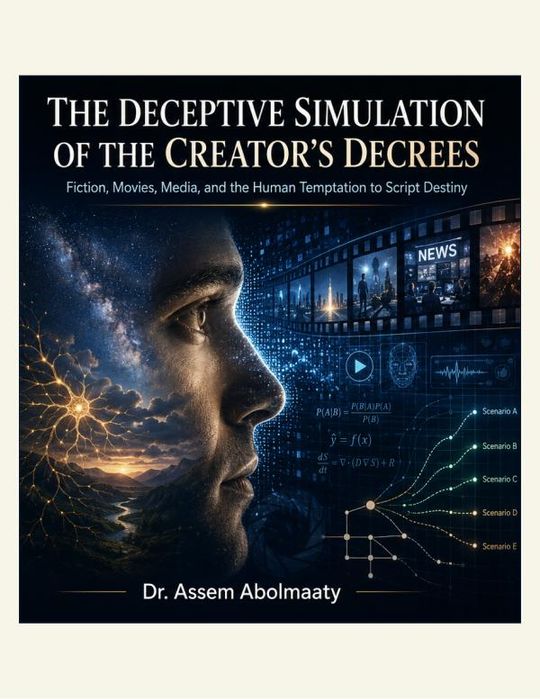
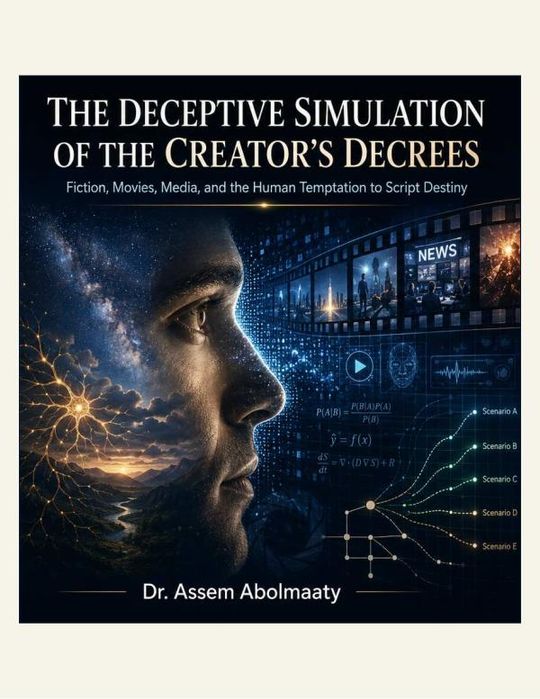
Modern civilization lives among simulations. A novel lets us inhabit an invented consciousness. A film compresses decades into two hours. Television repeats social worlds until they feel familiar. News selects certain events and leaves others outside the frame. Social platforms arrange personalized streams of attention. Artificial intelligence predicts the next word, image, purchase, illness, or risk. Digital twins imitate selected functions of organs, factories, and cities. Genetic technologies edit biological mechanisms. None of these achievements is trivial. Many are beneficial. The danger begins when a partial representation is presented as total knowledge, when probability is marketed as destiny, or when technological power is mistaken for authorship of existence. This book calls that mistake deceptive simulation. The phrase does not accuse every storyteller, scientist, journalist, or engineer of intentional deception. It names a cultural error: confusing a human construction with the order of reality itself. A simulation becomes deceptive when its boundaries disappear from view—when viewers forget that a film is edited, that a news agenda is selected, that an algorithm optimizes a target chosen by people, or that a prediction depends on data, assumptions, and uncertainty. The expression the Creator’s decrees belongs to theology, not experimental science. Different religious traditions understand providence, decree, freedom, causation, and responsibility in different ways. Science can study regularities in nature and evaluate the accuracy of models. It cannot place divine knowledge in a laboratory, nor can a theological claim substitute for empirical evidence. The method of this book is therefore boundary-conscious: evidence is used to explain cognition, communication, biology, and technology; philosophy examines meaning and responsibility; theology provides a horizon of humility without being disguised as a scientific result.

Language
English
ISBN
0000387339
Front Cover
Title Page
Chapter 1 - The Map, the Model, and the Decree
The Map, the Model, and the Decree
Chapter 2 - Why Human Beings Enter Simulated Worlds
Chapter 3 - Fiction: The Laboratory of Possible Lives
Fiction and Possible Lives
Chapter 4 - Cinema and the Editing of Destiny
Chapter 5 - Television, Streaming, and the Repetition of Reality
Chapter 6 - News Media: Framing the Visible World
Cinema, Television, and News Frames
Chapter 7 - Social Media and Algorithmic Providence
Chapter 8 - Misinformation, Deepfakes, and Synthetic Evidence
Feeds, Algorithms, and Synthetic Evidence
Chapter 9 - Prediction Machines: Data, AI, and the Illusion of Foreknowledge
Chapter 10 - Biology, Genes, and the Dream of Writing Life
Chapter 11 - Brain Science, Freedom, and Premature Conclusions
Prediction, Biology, and Brain Science
Chapter 12 - Public Health, Fear, and the Infodemic
Chapter 13 - Commerce, Politics, and Manufactured Inevitability
Chapter 14 - Discernment: Living Responsibly Among Simulations
Public Discernment, Stewardship, and Hope
Back Cover

Loading...